


Languages
- Español
- English
The UNESCO MILID Network launches a new global research agenda on media and information literacy and intercultural dialogue
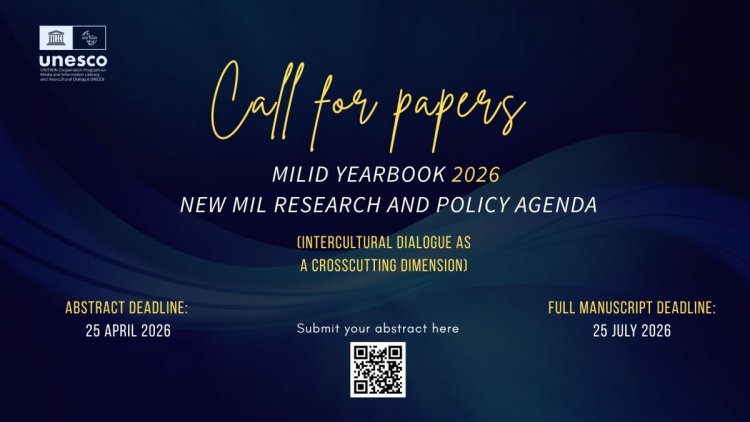
The UNESCO–UNAOC UNITWIN Network on Media and Information Literacy and Intercultural Dialogue (MILID) has opened the call for papers for the 2026 edition of its Yearbook, a flagship publication that aims to shape new research and policy directions in this strategic field.
Under the title “New MIL Research and Policy Agenda”, the upcoming edition places intercultural dialogue as a cross-cutting dimension of media and information literacy (MIL), aligning with the United Nations 2030 Agenda for Sustainable Development, particularly in areas such as education, equality, inclusion, and democratic governance.
Established in 2011 in Fez (Morocco), the MILID Network brings together universities from across the world to advance research, education, and civic engagement in media and information literacy and intercultural dialogue. Its annual Yearbook has become a key platform connecting academic knowledge with public policy and social practice.
The call highlights some of today’s most pressing challenges, including the impact of artificial intelligence, disinformation, hate speech, and algorithmic governance. It also addresses issues such as media education in multicultural contexts, youth engagement in digital environments, and the promotion of quality journalism.
Key thematic areas include:
- New conceptual frameworks for MIL and intercultural dialogue
- Social and psychological dimensions of diverse digital environments
- Media literacy as a tool against disinformation
- The relationship between artificial intelligence and cultural diversity
- Digital citizenship and democratic resilience
The 2026 Yearbook will be structured into two main sections:
- Research (Part I): peer-reviewed academic articles providing theoretical, empirical, or methodological contributions.
- Policies and Practices (Part II): analytical accounts of policies, programmes, and initiatives with demonstrated impact.
Both sections aim to foster a critical and global understanding of contemporary information ecosystems, with a strong emphasis on cultural diversity.
The submission process begins with abstract proposals due by 25 April 2026, a mandatory step before submitting full manuscripts, which are due on 25 July 2026. The final publication is scheduled for late 2026.
The call is open to researchers, practitioners, and policymakers worldwide, reinforcing the international and collaborative nature of the MILID Network. You can consult all the call requirements in the attached document.
With this initiative, UNESCO and its academic partners reaffirm their commitment to a form of media and information literacy that not only builds digital skills, but also promotes intercultural understanding, democratic participation, and equity in global information environments.